You're Canada!
People make fun of you a lot, but they're stupid because you've
got a much better life than they do. In fact, they're probably just jealous.
You believe in crazy things like human rights and health care and not
dying in the streets, and you end up securing these rights for yourself and
others. If it weren't for your weird affection for ice hockey, you'd be
the perfect person.
Take the Country Quiz
at the Blue Pyramid
Friday, February 03, 2006

Sunday, January 29, 2006
Once upon a time, among the activities and occupations of man there was an activity called scientific research and the performers of this activity were called scientists. In reality, however, these men were builders who constructed edifices, called explanations or laws, by assembling bricks, called facts. When the bricks were sound and were assembled properly, the edifice was useful and durable and brought pleasure, and sometimes reward, to the builder. If the bricks were faulty or if they were assembled badly, the edifice would crumble, and this kind of disaster could be very dangerous to innocent users of the edifice as well as to the builder who sometimes was destroyed by the collapse. Because the quality of the bricks was so important to the success of the edifice, and because bricks were so scarce in those days the builders made their own bricks. The making of bricks was a difficult and expensive undertaking and the wise builder avoided waste by making only bricks of the shape and size necessary for the enterprise at hand. The builder was guided in this manufacture by a blueprint, called a theory or hypothesis.
It came to pass that builders realized that they were sorely hampered in their efforts by delays in obtaining bricks. Thus there arose a new skilled trade known as brickmaking, called junior scientist to give the artisan proper pride in his work. This new arrangement was very efficient and the construction of edifices proceeded with great vigour. Sometimes brickmakers became inspired and progressed to the status of builders. In spite of the separation of duties, bricks still were made with care and usually were produced only on order. Now and then an enterprising brickmaker was able to foresee a demand and would prepare a stock of bricks ahead of time, but, in general, brickmaking was done on a custom basis because it still was a difficult and expensive process.
And then it came to pass that a misunderstanding spread among the brickmakers (there are some who say that this misunderstanding developed as a result of careless training of a new generation of brickmakers). The brickmakers became obsessed with the making of bricks. When reminded that the ultimate goal was edifices, not bricks, they replied that, if enough bricks were available, the builders would be able to select what was necessary and still continue to construct edifices. The flaws in this argument were not readily apparent and so, with the help of the citizens who were waiting to use the edifices yet to be built, amazing things happened. The expense of brickmaking became a minor factor because large sums of money were made available; the time and effort involved in brickmaking was reduced by ingenious automatic machinery; the ranks of the brickmakers were swelled by augmented training programs and intensive recruitment. It even was suggested that the production of a suitable number of bricks was equivalent to building an edifice and therefore should entitle the industrious brickmaker to assume the title of builder and, with the title, the authority.
And so it happened that the land became flooded with bricks. it became necessary to organize more and more storage places, called journals, and more and more elaborate systems of bookkeeping to record the inventory. In all of this the brickmakers retained their pride and skill and the bricks were of the very best quality. But production was ahead of demand and bricks no longer were made to order. The size and shape was now dictated by changing trends in fashion. In order to compete successfully with other brickmakers, production emphasized those types of brick that were easy to make and only rarely did an adventuresome brickmaker attempt a difficult or unusual design. The influence of tradition in production methods and in types of product became a dominating factor.
Unfortunately, the builders were almost destroyed. It became difficult to find the proper bricks for a task because one had to hunt among so many. It became difficult to find a suitable plot for construction of an edifice because the ground was covered with loose bricks. It became difficult to complete a useful edifice because, as soon as the foundations were discernible, they were buried under an avalanche of random bricks. And, saddest of all, sometimes no effort was made even to maintain the distinction between a pile of bricks and a true edifice.
BERNARD K. FORSCHER
Mayo Clinic
Rochester, Minnesota
Science 142:3590, October 18, 1963.
Saturday, January 28, 2006
Monday, January 23, 2006
Harper and Martin from Rick Mercer's Blog
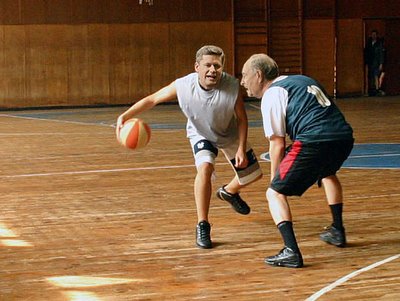
Ballin
Decepticons

Marionettes

An Elexmas
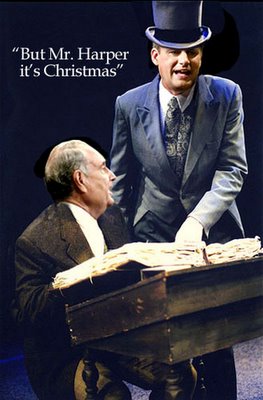
Bad Santa
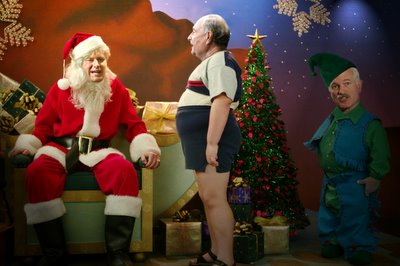
On the Pitch
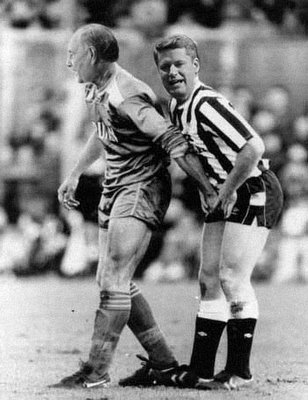
Guitar Duel
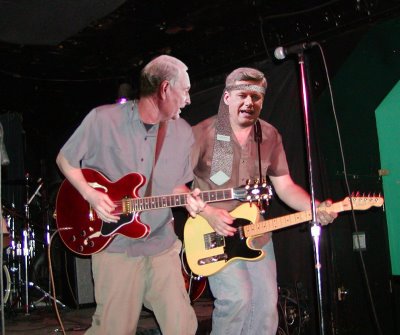

Bring me the head of Jean Chretien

I Like Mustard!
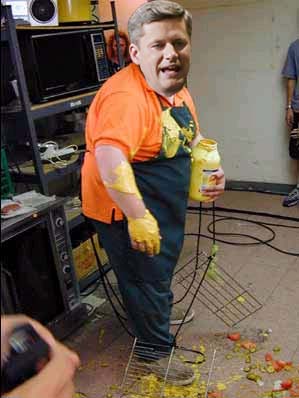
Il Dodo

Conservative Fun Land

Deft block
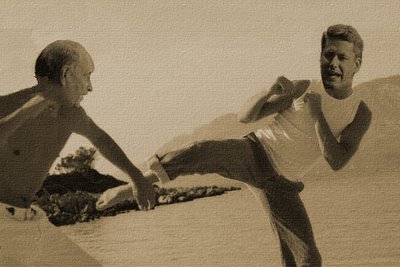
It's not easy being green.

What happens behind the Swinging doors!

Next Time I'm Driving

One man band

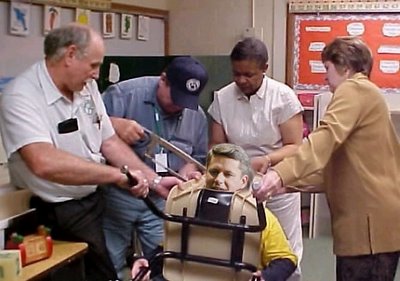
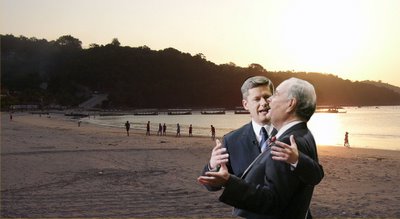

Harper and Martin from Rick Mercer's Blog
Wednesday, January 04, 2006
January 1st 2006


Keeping the tradition alive, I went to Delta for the annual polar bear swim with Bob, Kasandra, Sheree and Janice this year. I have done polar bear swim since 2001. It was extremely windy which made things a lot colder once wet. Our quick swim in the ocean was certainly refreshing.
If you missed the swim this year...don't worry there is always next year. This has become my New Year's Day ritual; all it takes is a brave soul to rush into the chilly waters of Boundary Bay.
Wednesday, December 21, 2005
Hawaii Pictures

Click to view photo's
The past few months have been super hectic; living in Vancouver and going to school. I had a quick trip to Hawaii in October for the ITU Triathlon World Championships and finally I have had some time to post some of my trip photos other than my race ones. I tried to cram as much sun, surf and racing in as possible during my short four-day stay on Oahu. I look back now and it seems like the trip never even happened. Over a year of intense training got me to the World Championships and I guess it was now or never, this trip was a celebration of my hard work to have consistant goals and behaviour!

Tuesday, December 06, 2005
While reading a textbook of chemistry, I came upon the statement "nitric acid acts upon copper." I was getting tired of reading such absurd stuff and I determined to see what this meant. Copper was more or less familiar to me, I could easily get my hands on it in the Chem. supply room. I had seen a bottle marked "nitric acid" on a table in the supply room, however I did not know its molarity, but I was getting on and likely to learn. The spirit of adventure was upon me. Having nitric acid and copper, I had only to learn what the words "act upon" meant. Then the statement, "nitric acid acts upon copper," would be something more than mere words.
All was still. In the interest of knowledge, I put one the thin copper disks on the table; opened the bottle marked "nitric acid;" poured some of the liquid on the copper; and prepared to make an observation.
But what was this wonderful thing which I beheld? The copper disks was already changed, and it was no small change either. A greenish-blue liquid foamed and fumed over the copper and over the table. The air in the small room of the performance became dark red. A great coloured cloud arose. This was disagreeable and suffocating - how should I stop this? I tried to get rid of the objectionable mess by picking it up and throwing into a fume hood, which I had meanwhile opened. I learned another fact -nitric acid not only acts upon copper but it acts upon fingers. The pain led to another unpremeditated experiment. I drew my fingers across my lab coat and another fact was discovered. Nitric acid also acts upon cotton. Taking everything into consideration, that was the most impressive experiment, and, relatively, probably the most costly experiment I have ever performed. Plainly the only way to learn about it was to see its results, to experiment.
Friday, December 02, 2005

Saturday is the last day the Bamff Mountain Film Festival is in Vancouver and will be one of the last times to ever be in the Ridge Theater before it is torn down. The Bamff Mountain Film festival has some of the best mountain cinematography anywhere in the world. There are amazing films ranging from mountaineering to ice and rock climbing to wildlife and environmental issues, as well as mountain sports such as skiing, kayaking, snowboarding. Come join Evan and I tomorrow night, you can buy tickets at Mountain Equipment Co-op. Cheers!
Subscribe to:
Posts (Atom)